Imagine you’re writing a blog post, script, or college essay about something quirky yet essential. Maybe it’s a meme term, a fictional concept, or a pop‑culture idea. You reach for the word “blorpus” again… and your reader’s eyes begin to glaze over.
You’re not alone. In 2026, modern writers juggle digital language, internet slang, and formal communication all at once. Sometimes you want to explain something fun, sometimes something abstract, and sometimes something that just feels weird to describe.
That’s where synonyms for blorpus come in even if “blorpus” itself isn’t in the dictionary, writers search for alternatives that capture curiosity, oddity, or vagueness to communicate better.
This guide helps students, bloggers, professionals, and English learners replace “blorpus” with powerful alternatives depending on your tone and context.
📖 What Does “Blorpus” Mean?
Since “blorpus” isn’t a standard English word in dictionaries, we can think of it as a creative placeholder—like jargon, a meme, or a made‑up concept in fiction or speech.
Writers, bloggers, and content creators sometimes invent words like this to:
- Draw attention
- Name fictional creatures or concepts
- Create branding or character names
- Add humor or abstract ideas
People search for “25+ synonyms of blorpus” to find alternatives that make their text clearer, more relatable, or stylistically stronger when using unconventional terms.
In practice, “blorpus” might represent:
- Something quirky or undefined
- A humorous concept
- A placeholder in creative writing
- A character, creature, or object without a real name
In other words, the goal isn’t just synonyms it’s appropriate replacements for writers who need to describe or replace weird, undefined concepts in real‑world communication.
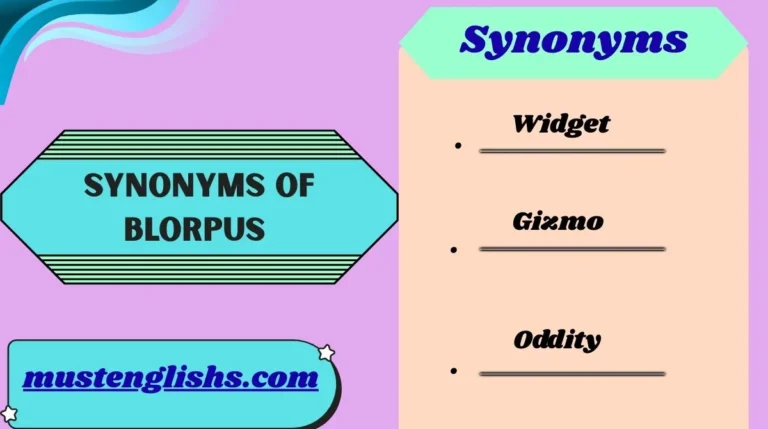
🧾 25+ Synonyms of Blorpus (With Meanings & Examples)
Here are words you can use instead of blorpus based on what you want it to imply in your writing.
1. Thingamajig
Meaning: A vague or unnamed object
Example: Pass me that thingamajig on the table.
Best Use: Casual, spoken writing
2. Widget
Meaning: A generic item or gadget
Example: The new app upgrade added a cool widget feature.
Best Use: Tech / informal
3. Gizmo
Meaning: Any small device or contraption
Example: I need a gizmo to fix the loose wire.
Best Use: Informal / tech
4. Doohickey
Meaning: An unnamed tool or feature
Example: Use that doohickey to tighten the bolt.
Best Use: Daily conversation
5. Contraption
Meaning: A strange or complex device
Example: The inventor showed off his new contraption.
Best Use: Creative / descriptive
6. Whatchamacallit
Meaning: A substitute name for something forgotten
Example: Could you hand me the whatchamacallit?
Best Use: Casual speech
7. Oddity
Meaning: Something strange or unusual
Example: The museum displayed local oddities.
Best Use: Creative / artistic
8. Mystery
Meaning: Something unknown or unexplained
Example: The disappearance remained a mystery.
Best Use: Narrative writing
9. Curio
Meaning: A curious object
Example: The collector treasured every curio.
Best Use: Formal / creative
10. Anomaly
Meaning: Something that deviates from the norm
Example: The data showed a rare anomaly.
Best Use: Academic / technical
11. Element
Meaning: A part or component
Example: Every element matters in the design.
Best Use: Professional
12. Feature
Meaning: A distinctive part or trait
Example: The software’s best feature is speed.
Best Use: Tech / business
13. Component
Meaning: A piece of a larger whole
Example: Replace the faulty component.
Best Use: Technical / formal
14. Artifact
Meaning: An object with cultural or historical interest
Example: The exhibit displayed ancient artifacts.
Best Use: Academic / creative
15. Concept
Meaning: An abstract idea
Example: The concept behind the game is innovative.
Best Use: Academic
16. Idea
Meaning: A thought or suggestion
Example: That idea could change the project.
Best Use: General
17. Element
Meaning: Basic part of something larger
Example: Each element of the plan was solid.
Best Use: Professional
18. Oddball
Meaning: Someone or something unusual
Example: He’s the oddball of the group.
Best Use: Casual / creative
19. Quirk
Meaning: A unique trait or characteristic
Example: Her quirk made her posts famous.
Best Use: Creative
20. Thing
Meaning: General item or topic
Example: Whatever that thing was, it worked.
Best Use: Any context
21. Specimen
Meaning: A sample or example
Example: The specimen surprised the researchers.
Best Use: Scientific / formal
22. Novelty
Meaning: Something new or unusual
Example: The toy was a fun novelty.
Best Use: Creative / casual
23. Oddment
Meaning: A leftover or fragment
Example: The box held oddments of cloth.
Best Use: Literary
24. Artifact
Meaning: A human‑made object of interest
Example: These artifacts tell a story.
Best Use: Academic / museum
25. Enigma
Meaning: A puzzling thing or person
Example: That phenomenon remains an enigma.
Best Use: Narrative / mysterious tone
26. Notion
Meaning: A general idea or belief
Example: We rejected the old notion.
Best Use: Formal / general
🧩 Category‑Wise Synonym Groups
Synonyms for Business Context
• Feature • Component • Concept • Idea • Element
Synonyms for Academic Writing
• Anomaly • Concept • Enigma • Notion • Specimen
Synonyms for Daily Conversation
• Thing • Gizmo • Doohickey • Whatchamacallit • Oddball
Synonyms for Creative Writing
• Oddity • Curio • Novelty • Enigma • Quirk
Synonyms for Professional Communication
• Feature • Idea • Component • Concept • Artifact
🎭 Tone Comparison Table
| Formal | Neutral | Casual |
|---|---|---|
| Component | Thing | Gizmo |
| Concept | Idea | Doohickey |
| Anomaly | Feature | Whatchamacallit |
| Artifact | Notion | Oddball |
| Specimen | Element | Thingamajig |
⚠️ Common Mistakes When Using Synonyms
• Don’t use gizmo or thingamajig in formal writing—it sounds too casual.
• Avoid oddball in professional emails—it can sound disrespectful.
• Don’t choose overly obscure words like oddment unless writing creatively.
• Avoid generic thing when you need precision or clarity.
• Ensure synonyms match your tone and audience.
💡 Pro Writing Tips (2026 Style)
• Use synonyms that fit context not just substitute for novelty.
• In the AI writing era, check if replacements make content read naturally.
• Mobile readers prefer short, familiar words.
• Balance creativity with clarity especially in professional communication.
• Use semantic variants like “novel idea,” “mysterious concept,” or “unique feature” for SEO strength.
⚡ Quick Cheat Sheet Table
| Purpose | Best Synonym |
|---|---|
| Formal / Academic | Anomaly, Artifact |
| Tech / Business | Feature, Component |
| Creative / Artful | Oddity, Curio |
| Everyday Conversation | Thing, Gizmo |
| Narrative / Storytelling | Enigma, Notion |
❓ FAQs
What is another word for blorpus?
Since blorpus is a creative or vague term, alternatives include things like gizmo, thingamajig, oddity or concept depending on your context.
What is blorpus in simple words?
Blorpus isn’t a standard dictionary word; it can represent any quirky or undefined idea or object in writing.
When should you use the word blorpus?
Use it in creative writing, humor, fiction, or playful contexts, but replace it with clearer synonyms in formal or academic writing.
Is blorpus formal or casual?
Blorpus is mostly casual or fictional so it works best in playful, creative, or informal writing.
How do I replace blorpus in professional writing?
Choose precise words like feature, component, or concept to maintain clarity and professionalism.
🧠 Did You Know?
• New words like blorpus often emerge from online communities and memes.
• English has no official vocabulary limit; new words are added every year.
• Creative terms boost engagement when used sparingly and with clarity.
• Replacing undefined terms improves reader understanding.
Conclusion
Although “blorpus” isn’t a real dictionary term, embracing creative language helps you communicate ideas better in writing.
Whether you’re a student, blogger, or professional communicator, knowing smart alternatives—from gizmo to concept gives you flexibility and clarity in every context.
Use synonyms thoughtfully to match tone, audience, and purpose, and you’ll communicate with greater precision and impact in 2026.